American Landscape
Land, light, and the act of looking.
Six American landscape paintings turn real places into choices about danger, peace, settlement, distance and spectacle. Follow the record from Thomas Cole's river bend to Frederic Edwin Church's rushing falls, Robert S. Duncanson's promised peace, Albert Bierstadt's mountain show, Winslow Homer's working harbor and Thomas Moran's edited West.
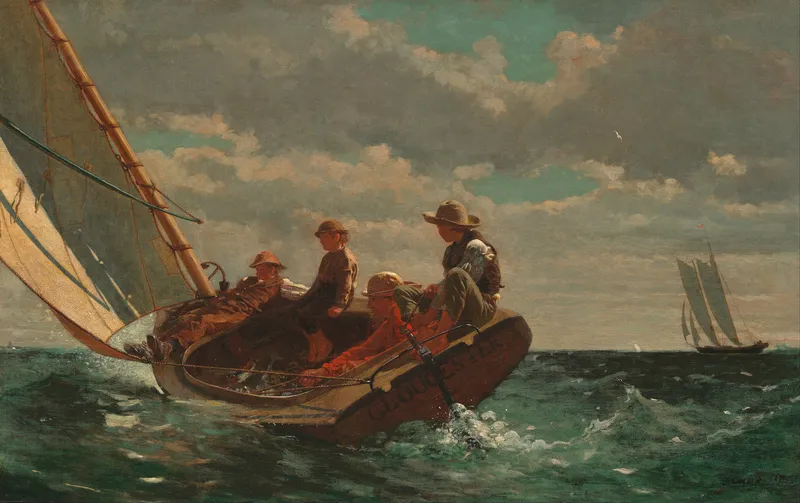
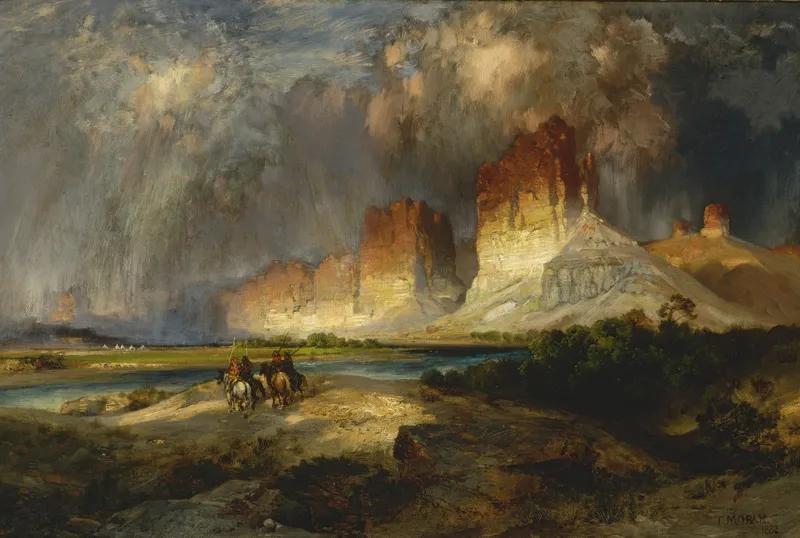
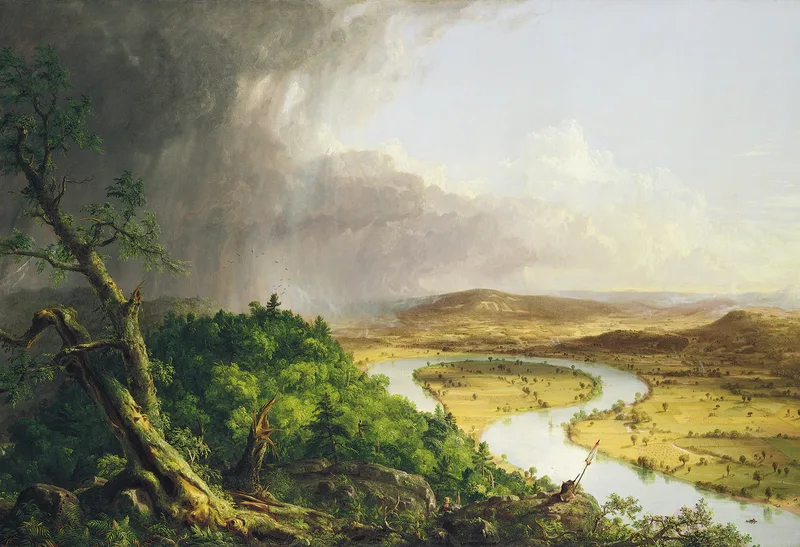
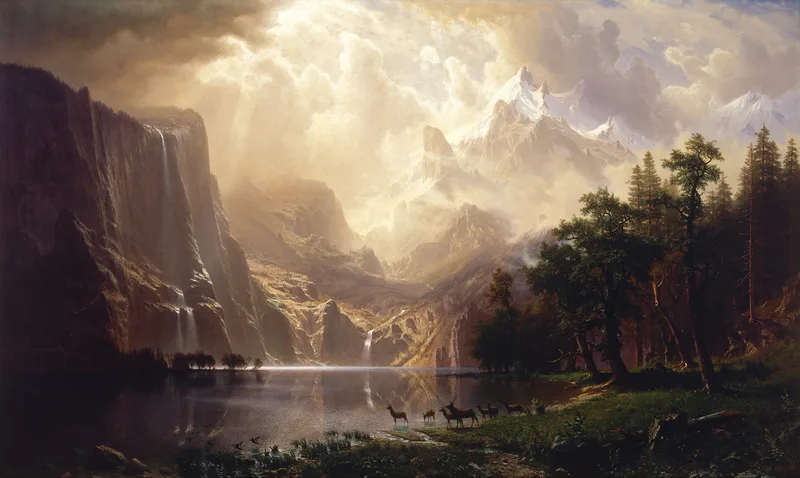
Cole divides one view. Church removes the safe edge. Duncanson builds a promise of home. Bierstadt stages a mountain reveal. Homer clears a busy harbor. Moran clears a town. Six landscapes show six different ways an artist can turn a place into a story.
A landscape is never just the land. One artist removes the safe place to stand. Another sends every figure home under a rainbow. Others leave out a person, a town or the studio where the final picture was built. The museum records let you catch each choice.
What Defines an American Landscape Painting?
An American landscape painting uses land, water, weather, buildings, roads or regional life as its main subject. The category covers coastal harbors, deserts, mountains, farms and working waterfronts. The place matters. The artist's choices about the place matter just as much.
Take the Six-Stop Trip
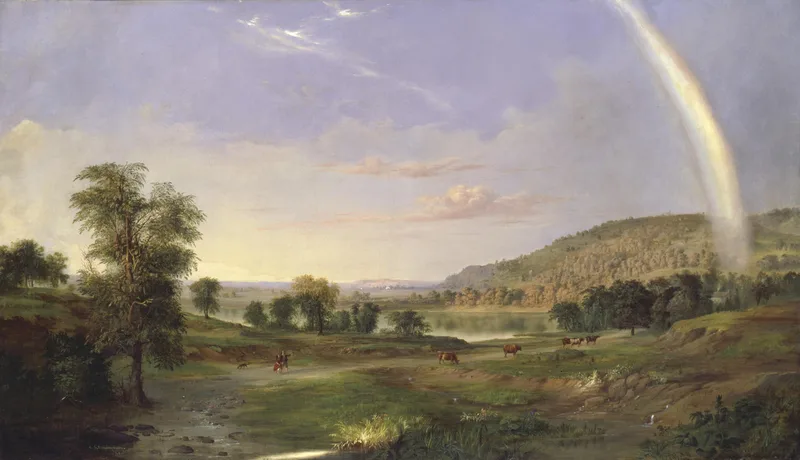
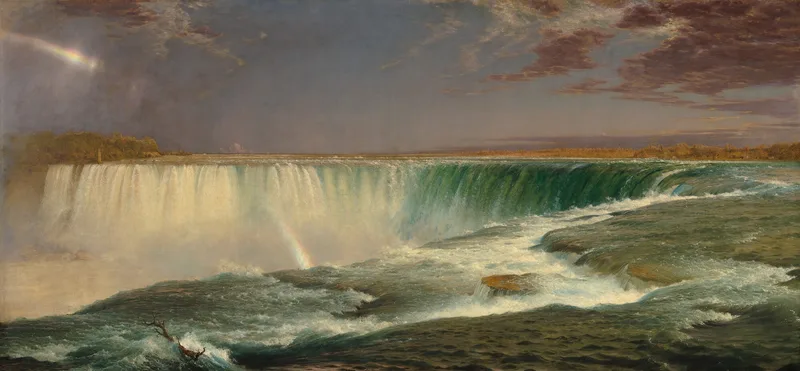
Start at Cole's Oxbow, where storm and settlement split the view. Move to Church's Niagara, where the water carries you to the edge. Duncanson gives you a home beneath a rainbow. Bierstadt turns California into a touring spectacle. Homer puts you inside a working harbor. Moran ends in a Wyoming canyon where the real town has disappeared.
How to Read the Record Behind a Landscape
Before you trust a landscape, find out how it was made and what happened to it afterward. Every work here carries answers in a public museum record.
- Where did the subject come from, and when was the artist actually there?
- Was it painted on location, from studies, from memory, or from somebody else's picture?
- Is the piece unique, part of an edition, or a reproduction?
- Who has owned it, and can that chain be traced back to the artist?
- Is the work in copyright, or is it free to copy and print?
Buy the Record With the Picture
The strongest purchase carries enough information to identify the artist, the work, the materials, the date and the sale. If a detail has not been checked, ask for it. A thin record can be improved before the sale. An invented record cannot.
Artwork in This Collection
Featured Artists
Frederic Edwin Church
Oil on canvas, Oil sketch
1826 ... 1900 · New York, the Americas and the Middle East