Frederic Edwin Church
1826 ... 1900 · New York, the Americas and the Middle East
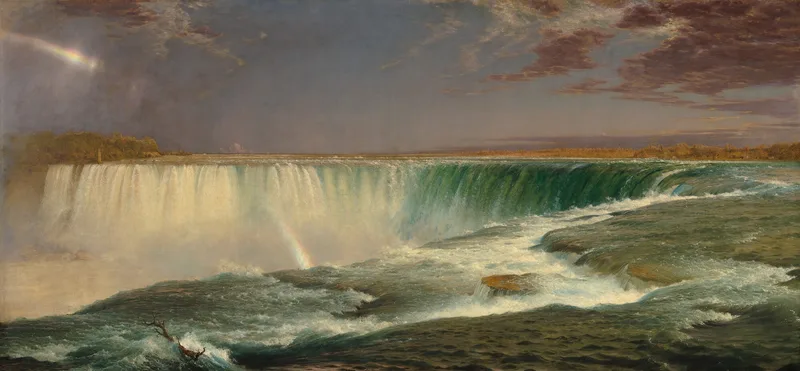
Church brought the viewer to the lip of the falls, then marketed the one painting as an event people paid to enter. See the documented work.
Biography
Frederic Edwin Church studied with Thomas Cole, then pushed the American landscape into an even larger public show. He traveled for sketches and studies, but built his finished canvases in the studio.
Church wanted viewers to feel dropped into the place. Wide formats, sharp detail and carefully controlled viewpoints gave his paintings the pull of a panorama.
He also understood attention. Niagara toured like an event, and people paid to see one painting. The picture became famous before most viewers had any chance to visit the falls themselves.
How Frederic Edwin Church Worked
Niagara removes a safe lookout. The viewer seems to hover just above the rushing green water, close to the drop, with no foreground rail or standing figure to create distance. That point of view turns a known tourist sight into a physical jolt.
What Backs This Record
The National Gallery of Art holds Niagara and records Church as its maker, with the date, medium, dimensions, ownership history, exhibition history, and accession number.
Church died in 1900, so the work itself is out of copyright. The National Gallery of Art marks its image of Niagara free and in the public domain.